Unit 6 第 4 课时(Section B 1a–1d):阅读芬兰男孩 Timo 的一篇记叙文,用略读把握文体与大意,用细读按时间顺序梳理作息,借助思维导图复述,并思考如何合理利用时间。
上一课时(Section A)学习了作息短语与时间表达,本课在阅读中复用这些语言,并把视角从“我”转向“他人”,复述时使用第三人称单数。
单击空白处 / 空格 / → 推进,← 回退;N 打开教学提示;F 全屏。原课时的听力部分可由教师朗读语段。
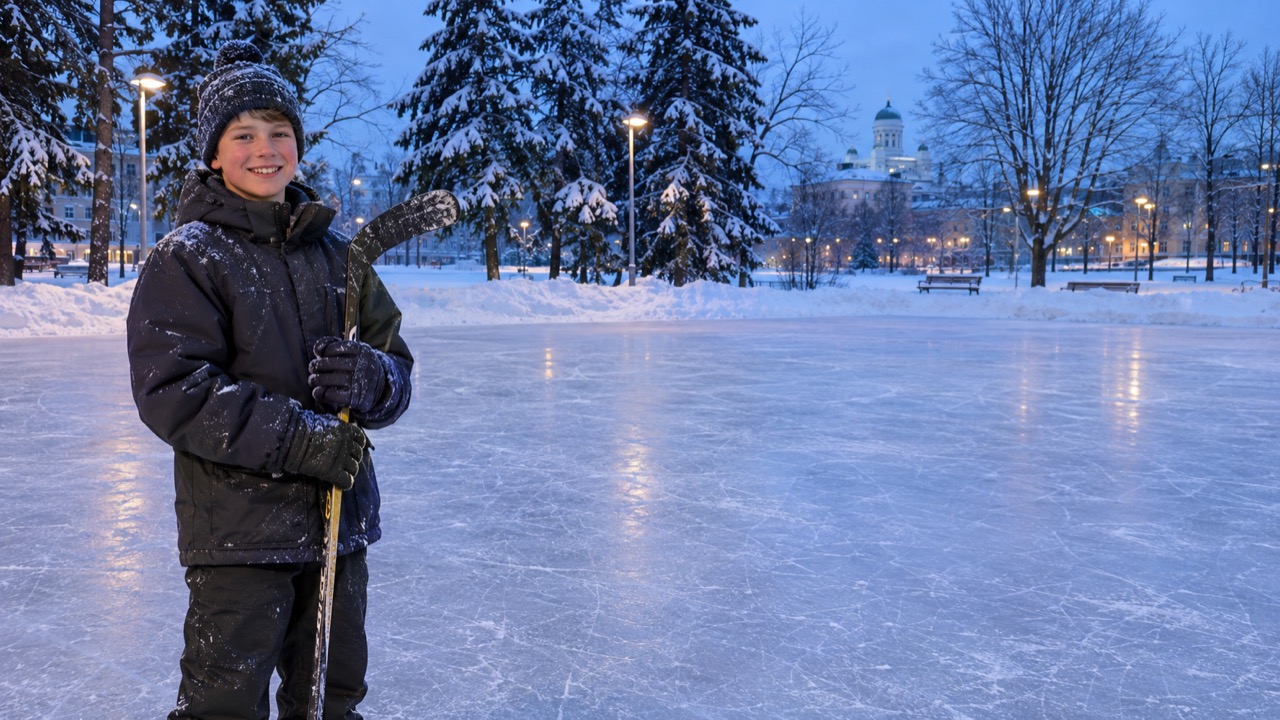
看图猜一猜:他在做什么?多大?在哪里?
Maybe he plays ice hockey. He is about 12 or 13. Maybe he lives in a cold country in winter.
先让学生围绕 What? How old? Where? 自由猜测,不急于给答案;结合图片学习 warm clothes、ice、hockey /ˈhɒki/、ice hockey stick。猜测的答案在下一页阅读中验证。
可追问:Is it hot or cold there? What sport is it?

| Who | Timo Halla |
|---|---|
| How old | 13 |
| Where | Helsinki, Finland |
| When | December |
限时 1–2 分钟快速阅读,只找文体和四个要素。记叙文通常交代 who / when / where / what;本文用第一人称、按时间顺序叙述 Timo 的一天,所以是 narration。
核对后回到上一页的猜测:猜对了吗?(He plays ice hockey; he is 13; he lives in Helsinki, Finland.)
认识芬兰:单击空白处,地图逐层点亮。
结合地图介绍芬兰:位于北欧,冬季漫长寒冷,湖泊众多(“千湖之国”),首都赫尔辛基。北极圈(Arctic Circle)穿过芬兰北部,为后面讨论“为什么下午 4 点天就黑了”做铺垫。
地图为示意图,只画出主要轮廓。
标题要概括全文的主要内容(main idea)。
Time words
at 7:40 · after breakfast · at 9:00 · after that · then · around 4:00 · at 9:30
main idea 主旨
Timo's day: from getting up to going to bed.
先让学生独立选择标题,再看结构图:第 1 段写在学校的时间,第 2 段写放学回家后的时间,全文按时间顺序(the order of time)展开。选标题的依据是主旨(main idea)。
提醒:Every Tuesday 说明写的是“某一个上学日”,所以是 One of Timo's School Days。
| Time | Timo's activity |
|---|
先点活动,再点表格中的空格;也可单击空白处依次填出。
学生再读全文,按时间顺序填写时间表。时间旁给出上一课时学过的读法(如 7:40 seven forty / twenty to eight),可请学生读出。
答案:get up / school begins / have lunch / the afternoon lessons begin / the afternoon lessons finish / go to the ice hockey club / get home / have dinner / read with his parents for an hour / go to bed。
右下角的条带标出 12 月赫尔辛基大约的白天时段(深色为天黑),可引导学生发现:Timo 放学后不久天就黑了。
先听老师朗读第 1 段,再看原文核对。
Timo's school begins at .
Each lesson is minutes long.
原课时为听力:教师朗读第 1 段(可读两遍),学生带着问题听,再看原文核对。第 1 题对应 I often listen to the news or music;第 2 题对应 Each lesson is 45 minutes long。
提醒学生回答用第三人称:He often listens …(listen 加 -s)。
Students learn about cooking, housework, and family finances (理财).
Ice hockey is a national sport and is very popular in Finland, just like ping-pong in China.
第 3 题引出两门课:Finnish(芬兰语,芬兰的母语课)与 home economics(家政课:学做饭、做家务、家庭理财)。可追问:Do you want to have home economics lessons? Why?
第 4 题:冰球是芬兰的国民运动,就像乒乓球在中国一样受欢迎。
教师朗读第 2 段,学生带着两个问题听。核对时注意 That's an important part of my everyday life 中 That 指代“和父母一起读书一小时”。
下方夜景条按原文顺序呈现晚上的活动:around 4:00 到家(天已黑)→ 6:00 晚饭 → 饭后读书一小时 → 准备书包 → 9:30 睡觉。
It's December in Finland, so the daytime becomes really short.
先让学生在原文中找线索:Now it's December. / It's already dark outside. 再结合上一页的地图:芬兰在欧洲北部,北部还在北极圈内,冬天白天很短。
条带中的日出日落为十二月中旬的大致时间:赫尔辛基约 9:20 日出、15:15 日落,白天不到 6 小时;北京约 7:30 日出、16:50 日落。下午 4 点在赫尔辛基已是天黑,在北京太阳还没落山。
He often listens to the news or music after he gets up.
After finishing his lessons, he goes to the ice hockey club. It's good for his health, and he can also develop his hobby.
He reads with his parents for an hour after dinner. This is a good habit. He can also enjoy the time with his parents.
He prepares his schoolbag for the next day before he goes to bed. It's important to prepare ahead.

What do you do after you get up? What do you do after dinner? Do you prepare your schoolbag ahead?
小组讨论 Timo 怎样利用时间,用 First, Secondly, Thirdly, At last 有条理地表达,并说明好处(good for his health / develop his hobby / a good habit / prepare ahead)。
最后联系自己:你起床后、晚饭后通常做什么?会提前准备书包吗?
Timo Halla is a 13-year-old boy … He gets up at … Then he goes … I think he lives a … life.
Timo (get) up at 7:40. After school, he (go) to his ice hockey club.
先看基本信息(name, age, place, writing time),再按时间顺序看日常作息,最后用第三人称复述:He gets up … He goes … He reads … 句末加上自己的评价:I think he lives a busy / healthy / happy life.
点“遮住活动”只留时间,请学生凭记忆复述;填空答案:gets;goes。
| Criteria | What to check 看什么 | Star |
|---|---|---|
| Complete | 讲到了基本信息和一天的主要活动 | |
| Correct | 时间准确;动词用对第三人称单数:gets up, goes, reads | |
| Coherent | 按时间顺序,用 then, after that, at 9:30 … 连接 | |
| Colourful | 加上自己的看法,如 I think he lives a busy but happy life. |
Timo Halla is a 13-year-old boy. He lives in Helsinki, Finland. He gets up at 7:40. His school begins at 9:00. After school, he goes to his ice hockey club. He gets home around 4:00. After dinner, he reads with his parents for an hour. I think he lives a busy but happy life.
You talk about … clearly.
I like the sentence “…”.
Maybe you can add …
同伴互评:一人复述,一人按四项打星,再用左边的句子给一条建议。
学生两人一组复述后互评。四项标准:Complete 完整、Correct 正确、Coherent 连贯、Colourful 生动,每项最多三颗星,点击星星即可计分。
评价时先说优点,再提一条改进建议。
How different are people's daily routines?
What can you learn from Timo? How do you plan your time?
合理安排时间就是节约时间,节约时间就是延长生命。
请学生理解两句话:计划时间就是节约时间;节约时间就是延长生命。再回到单元问题:不同的人日常作息有何不同?我们能从 Timo 身上学到什么?
完成你某个上学日的作息时间表,并写下你和 Timo 上学日的不同之处。
上网了解其他国家学生的日常作息,找到更多合理利用时间的方法。
| Activity | My time | Timo's time |
|---|
I get up at 6:30, but Timo gets up at 7:40.
My school begins at 7:50, but Timo's school begins at 9:00.
必做:完成自己某个上学日的作息表,并写出与 Timo 的不同。右侧表格可当堂示范:学生填写自己的时间后点“比一比”,对照 Timo 的时间说出不同,如 I get up at 6:30, but Timo gets up at 7:40.
选做:上网了解其他国家学生的作息与时间管理方法。